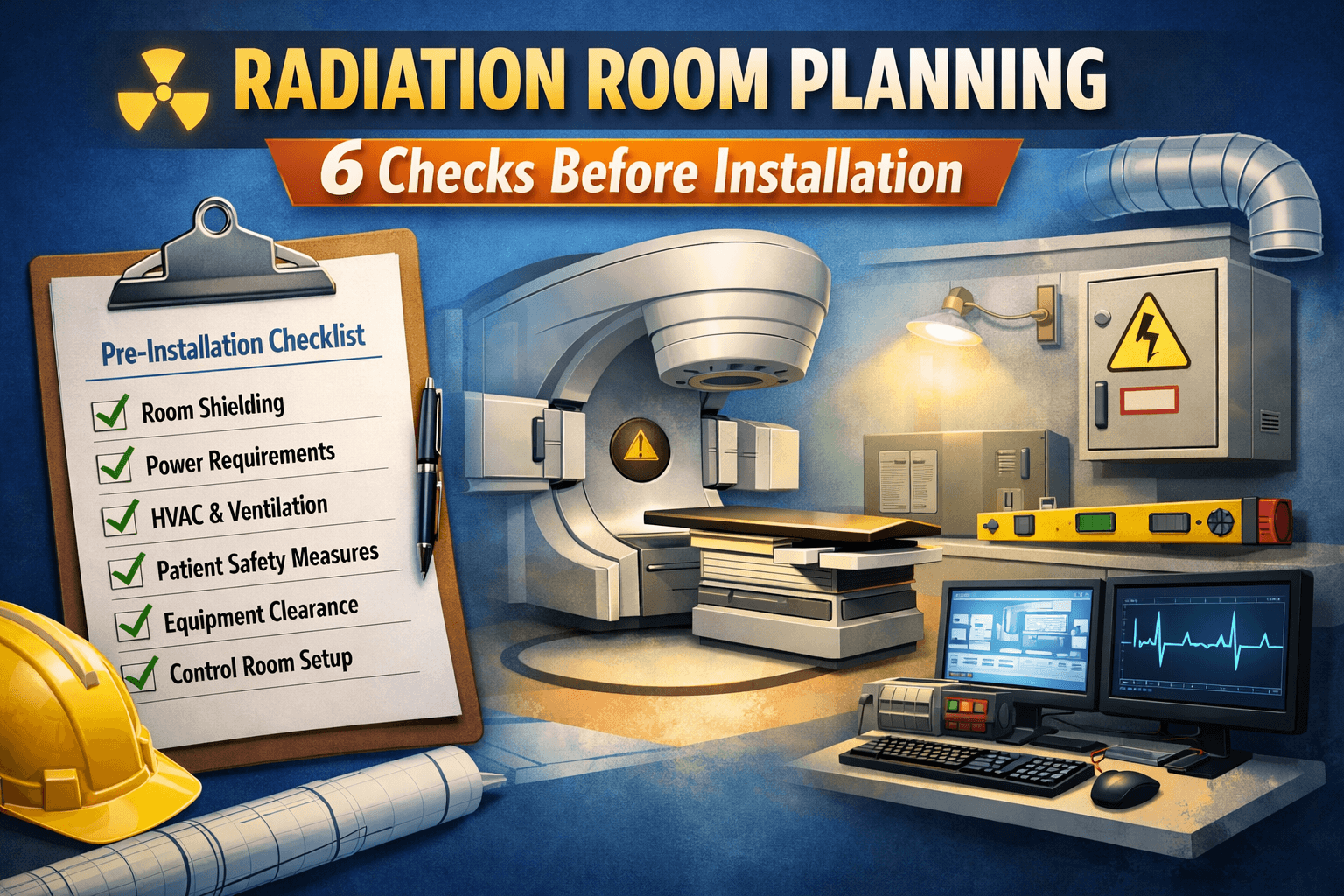
Radiation Room Planning: 6 Checks Before Installation
A practical pre-installation checklist for shielding, workflow, utilities, and regulatory readiness before imaging equipment arrives on site.
Radiation room planning starts before delivery day
Successful imaging projects are rarely delayed by the equipment itself. The real setbacks usually come from late utility checks, incomplete shielding details, or a room layout that does not match workflow expectations.
1. Confirm the room envelope and shielding scope
Before installation is scheduled, verify wall construction, door protection, viewing panels, and ceiling details against the approved safety assessment. Even small discrepancies can force a redesign after materials are already on site.
2. Validate power, grounding, and cable routing
Equipment teams need more than a power point on the wall. They need:
- Dedicated electrical capacity
- Reliable grounding
- Data routing that avoids interference
- Clear pathways for cables and service access
3. Plan for movement, not just placement
A room can fit the machine and still fail operationally. The layout should account for:
- Staff movement around the patient
- Stretcher turning radius
- Emergency access
- Comfortable control-area visibility
4. Review compliance milestones early
When regulatory documentation is left for the end, opening dates slip. Keep a clear timeline for safety assessment sign-off, shielding verification, and authority approvals before the final commissioning window.
5. Align vendors on one implementation plan
Construction, biomedical, electrical, and radiation protection teams should work from the same checklist. A simple shared plan reduces avoidable rework.
type InstallationReadiness = {
  shieldingApproved: boolean;
  utilitiesVerified: boolean;
  workflowReviewed: boolean;
  authorityDocumentsReady: boolean;
};

const readyForDelivery = (checklist: InstallationReadiness) =>
  Object.values(checklist).every(Boolean);
6. Capture a commissioning baseline
Document the room condition, installed protection elements, and equipment acceptance results. That baseline makes future maintenance, audits, and troubleshooting substantially easier.
Final takeaway
Room readiness is a systems problem. When shielding, utilities, workflow, and compliance are reviewed together, the project moves faster and commissioning becomes predictable.