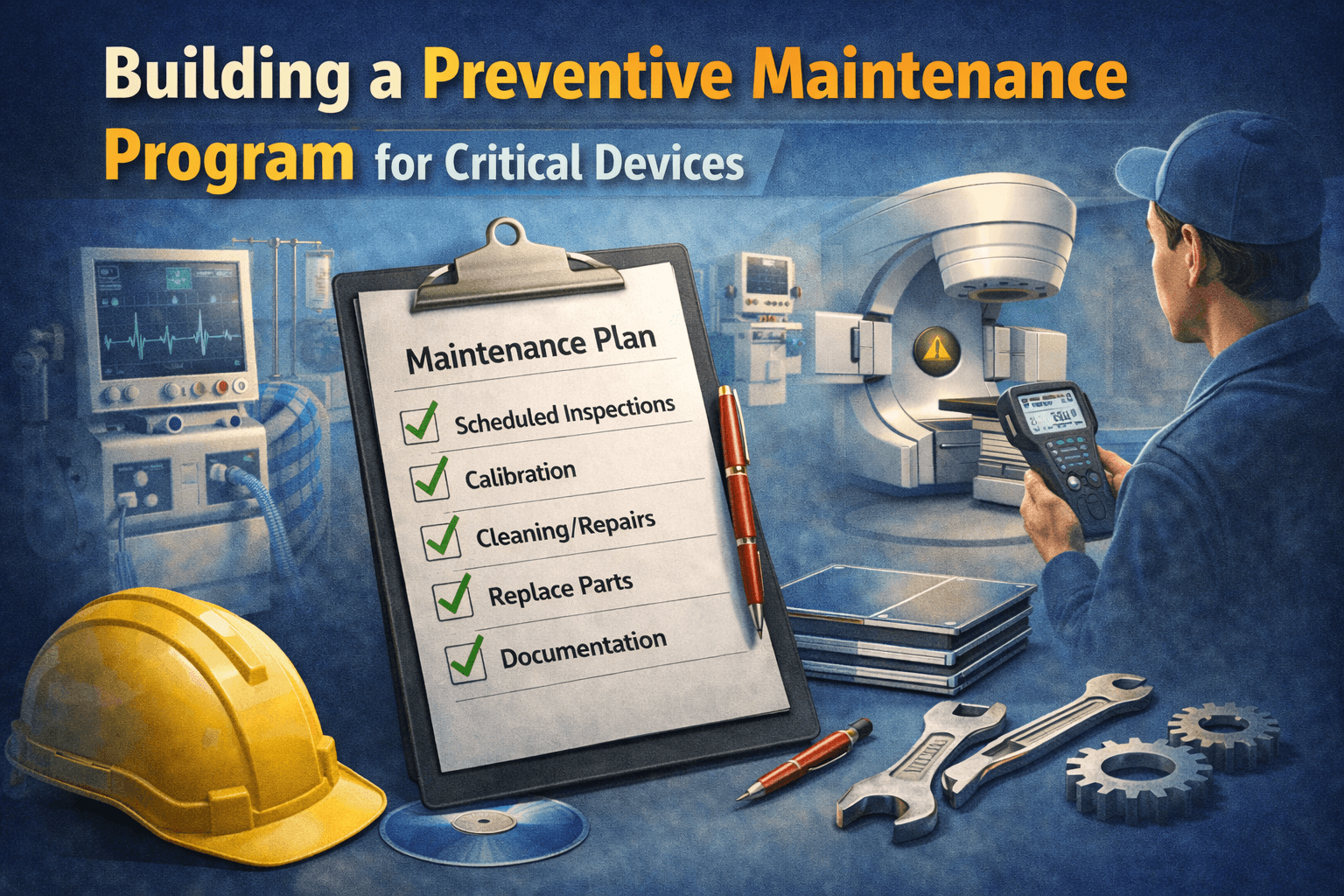
Building a Preventive Maintenance Program for Critical Devices
How to structure a preventive maintenance schedule that improves uptime, keeps records audit-ready, and supports safer equipment ownership.
Preventive maintenance should protect uptime, not create paperwork
A good biomedical maintenance plan is measurable, repeatable, and easy for operations teams to follow. If the process depends on memory or scattered spreadsheets, reliability will drift over time.
Start with equipment criticality
Not every device should be serviced at the same interval. Group assets by clinical impact, usage intensity, and regulatory expectations. Critical systems deserve tighter review cycles and better documentation.
Standardize the maintenance record
Every visit should capture the same core details:
- Asset identifier and location
- Inspection date
- Functional checks completed
- Calibration or test results
- Replaced parts
- Technician sign-off
Use failure history to refine the schedule
If a device category repeatedly passes inspections with large performance margins, its interval might be too aggressive. If failures cluster between visits, the interval is probably too long.
Build simple reporting around service trends
Even a lightweight report helps leadership see where resources are going.
monthly_summary:
  completed_work_orders: 42
  overdue_assets: 3
  repeat_failures: 1
  calibration_pass_rate: 98%
Train for first-response triage
Clinical teams should know what to report before a technician arrives. Clear symptom reporting reduces repeat visits and shortens downtime.
Final takeaway
Preventive maintenance works best when the schedule reflects device risk, the records are consistent, and the review loop is based on actual service outcomes.